What to do now
- Guinea pigs need at least 10 mg of vitamin C per kg of body weight per day, and pregnant females need 30 mg/kg.
- Feed fresh guinea-pig-specific pellets. Vitamin C in pellets breaks down with heat, light and moisture, often within a few months.
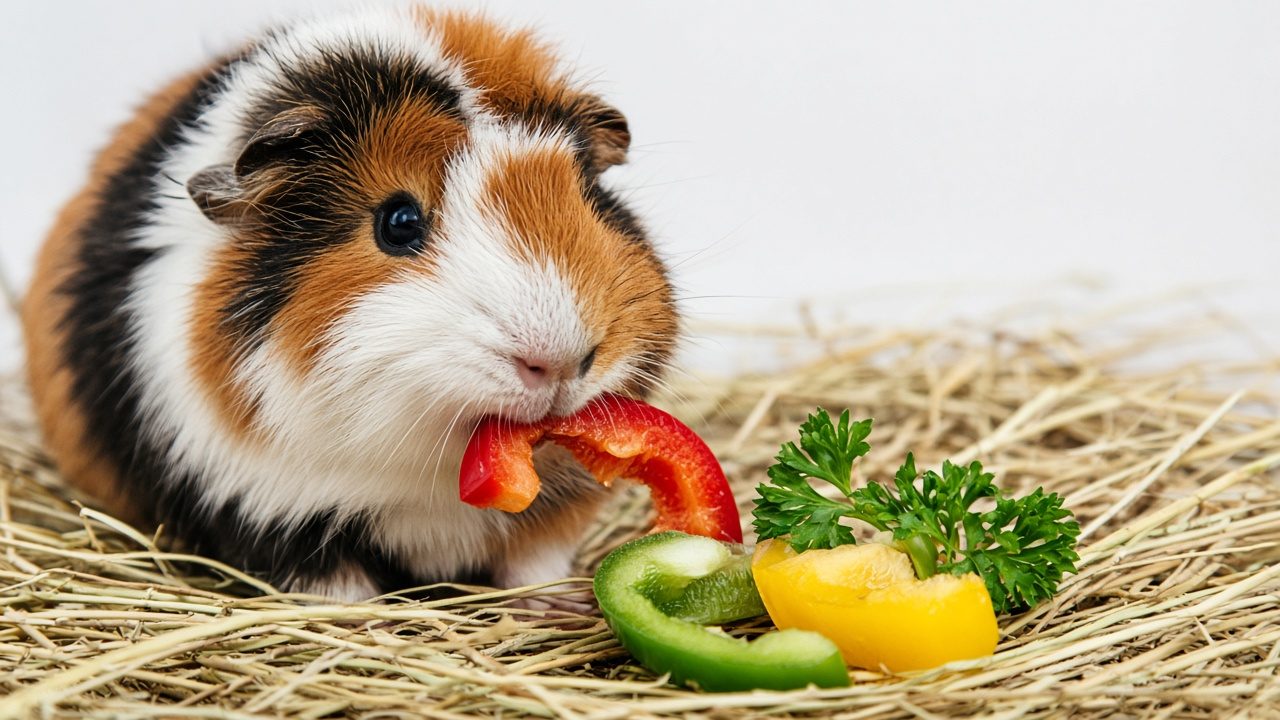
- Add vitamin C-rich veggies daily, such as bell peppers, broccoli, parsley, kale, red cabbage and turnip greens.
- Unlimited hay is non-negotiable for teeth and gut health.
- Skip multivitamins unless your vet prescribes one. Some added vitamins can harm guinea pigs.
In this article
Like people, guinea pigs can’t make their own vitamin C. They have to get it from food every day. When they don’t, they develop scurvy, which the Merck Veterinary Manual names as one of the most common nutrition problems in guinea pigs. The good news is that it’s easy to prevent.
How much vitamin C do they need?
According to the Merck Veterinary Manual:
- At least 10 mg of vitamin C per kg of body weight per day for a typical adult
- 30 mg per kg per day for pregnant females
Most guinea pigs weigh around 1 kg, and vitamin C is safe even at higher doses. That means about 10 mg per guinea pig per day, or 30 mg for a pregnant sow, is a simple target.
Why the pellets might not be enough
Fortified pellets are a good base, but vitamin C in pellets is unstable. Heat, light and moisture break it down, and food can lose much of its vitamin C within a few months. Some tips:
- Buy guinea-pig-specific pellets, not rabbit food.
- Check the milling or best-by date and buy small bags you’ll finish quickly.
- Store pellets sealed, cool, dry and out of the sun.
Best everyday vitamin C foods
Merck lists these vitamin C-rich foods:
- Bell peppers
- Broccoli
- Parsley
- Kale
- Red cabbage
- Turnip greens
- Oranges and strawberries (they’re sugary, so treat them as occasional extras)
Hay comes first. Merck says hay is essential for wearing down guinea pigs’ teeth and keeping their gut bacteria healthy. Too little fiber, or too many pellets and sugary foods, can slow or stop digestion, causing gas, bloating, pain, loss of appetite and a fast decline.
Should you use supplements?
Your vet may prescribe vitamin C on its own, by mouth or injection, to treat a deficiency. Merck says general multivitamins are usually not advised, because some of the added vitamins can harm guinea pigs.
Signs of vitamin C deficiency (scurvy)
Watch for:
- Rough coat
- Lameness or swollen joints, or reluctance to move
- Loss of appetite and weight loss
- Dental problems
- Bleeding under the skin
- Diarrhea, weakness, or getting sick suddenly
Left untreated, scurvy can be fatal. If your guinea pig stops eating, call an exotic-animal vet the same day. Small herbivores can go downhill fast when they stop eating, and the vet will look for causes like dental disease or diet problems.

Tails & Tips Editors
The Tails & Tips editorial team turns official sources (FDA and AVMA notices, veterinary school guidance, the Merck Veterinary Manual) into short, practical to-dos. This article was checked against 2 cited sources.
Sources
- Nutritional Problems of Guinea Pigs — Merck Veterinary Manual (reviewed Oct. 2025)
- Housing and Nutrition of Guinea Pigs — Merck Veterinary Manual